What a fully-run EVA league looks like, and why it took five minutes to set up.
Act I: Last night in Bucharest
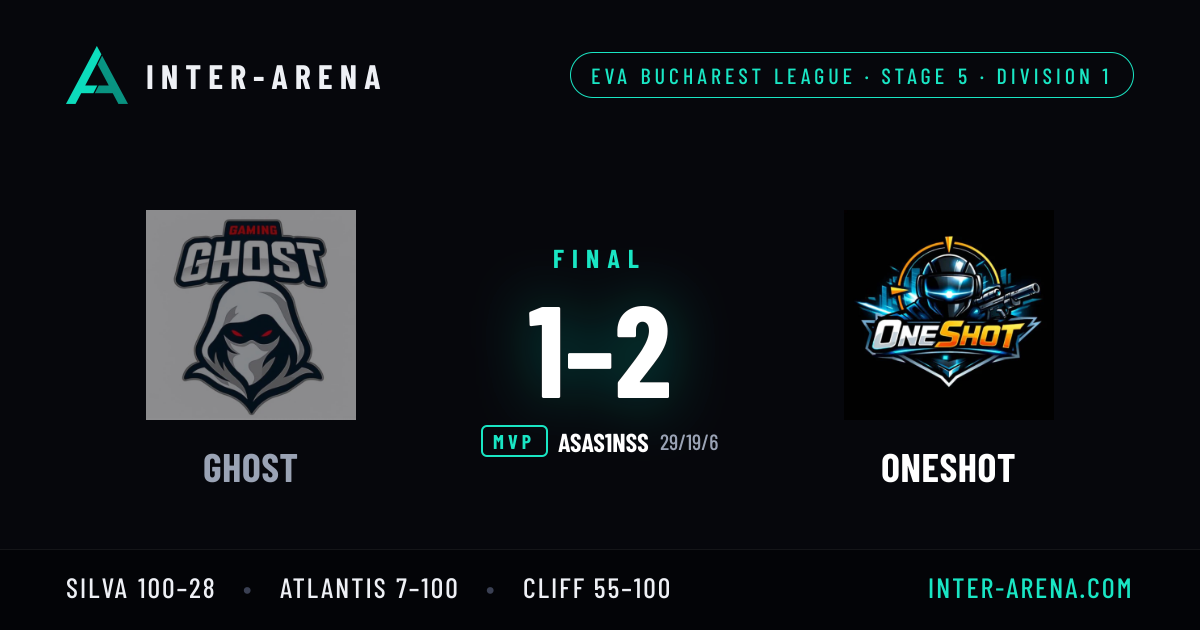
At 22:47 on a league night in Bucharest, the last map of a Division 1 series ends. Seconds later, a result card lands in the community's Discord: both crests, the final score, every map with its score, and the MVP of the series with their K/D/A. Nobody typed anything.
When the final series of the night wraps, a second card follows on its own: the division's night table, with wins, map difference and points, plus green arrows next to the teams promoting and red arrows next to the teams going down. Full time. The community argues about it within minutes, which is exactly the point.
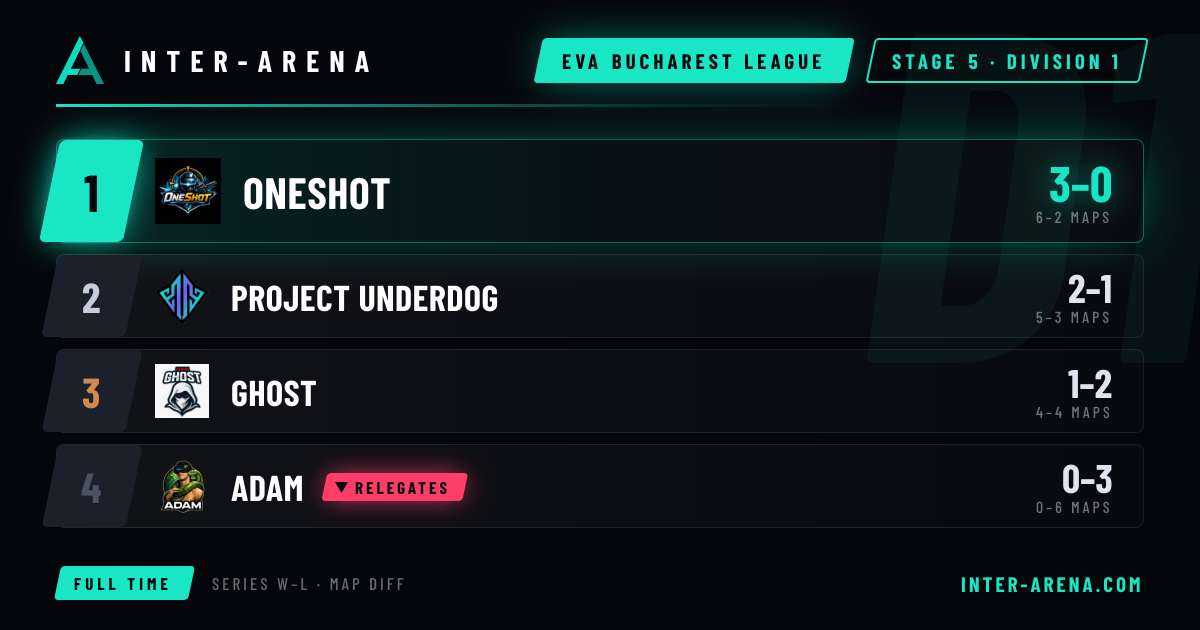
This is the EVA Bucharest League running on Inter-Arena. Every score you see was played in an EVA arena and arrived on its own: no operator with a clipboard, no spreadsheet, no volunteer typing results at midnight. The platform sits next to the arena, and results simply flow in.
The rest of this article is about everything around that moment: what a venue can configure, what its screens look like, and the engine that keeps every single night competitive, even the ones where no full team shows up.
Act II: Five minutes to matchday
We onboard you. Your checklist: a Discord server.
Onboarding is done by Inter-Arena, for the venue. It takes about five minutes of our time and none of yours. When we hand over the keys, your venue has its own dashboard, its own public pages, and its arena already talking to the platform.
The one thing only you can do, because the server is yours, is invite the Inter-Arena bot to your Discord. That's a single click from your admin panel, and the panel holds your hand: it computes the bot's permissions per channel before anything is sent, so the channel picker only offers channels that will actually work, and tells you exactly which permission is missing on the ones that won't. A Send test button confirms the wiring with one click.
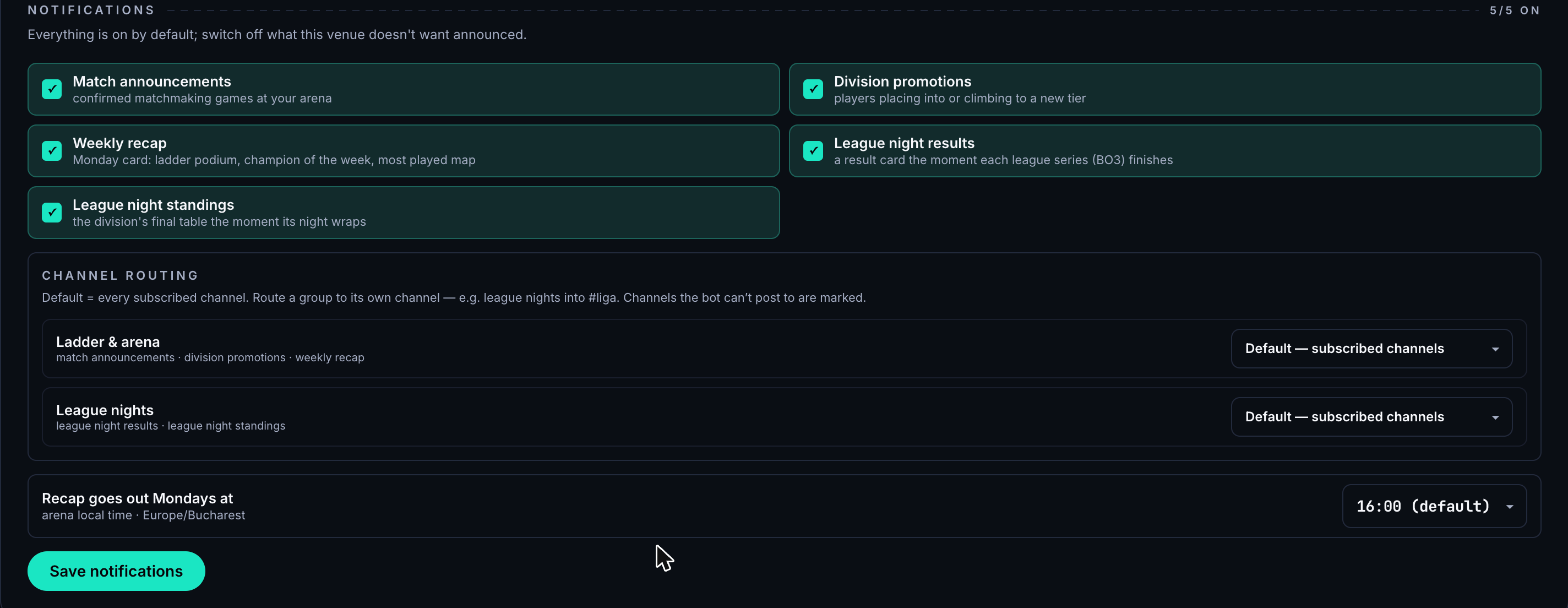
Notifications: you choose what fires, and where it lands
The venue decides which notifications its community gets (series results, night standings, ladder promotions, matchmaking announcements, the weekly recap) and routes them by group: competitive league traffic to one channel, ladder and arena life to another. Every Monday morning, in the venue's own timezone, a recap of the week posts automatically: who climbed, who won, what happened. It is the heartbeat that keeps a community warm between visits.
Leagues that administrate themselves
A venue creates a season, sets its divisions, and the platform generates the match nights. From there the sporting pyramid runs on rails: results attach to fixtures automatically, standings compute live, and when a stage closes, promotion and relegation apply, with seeds rotated by merit, the way real tournaments do it. Rosters freeze per season. And because reality is messy, the venue admin can edit anything: a score, a walkover, a roster. The platform recomputes everything downstream.
Your screens, exactly how you want them, previewed before they go live
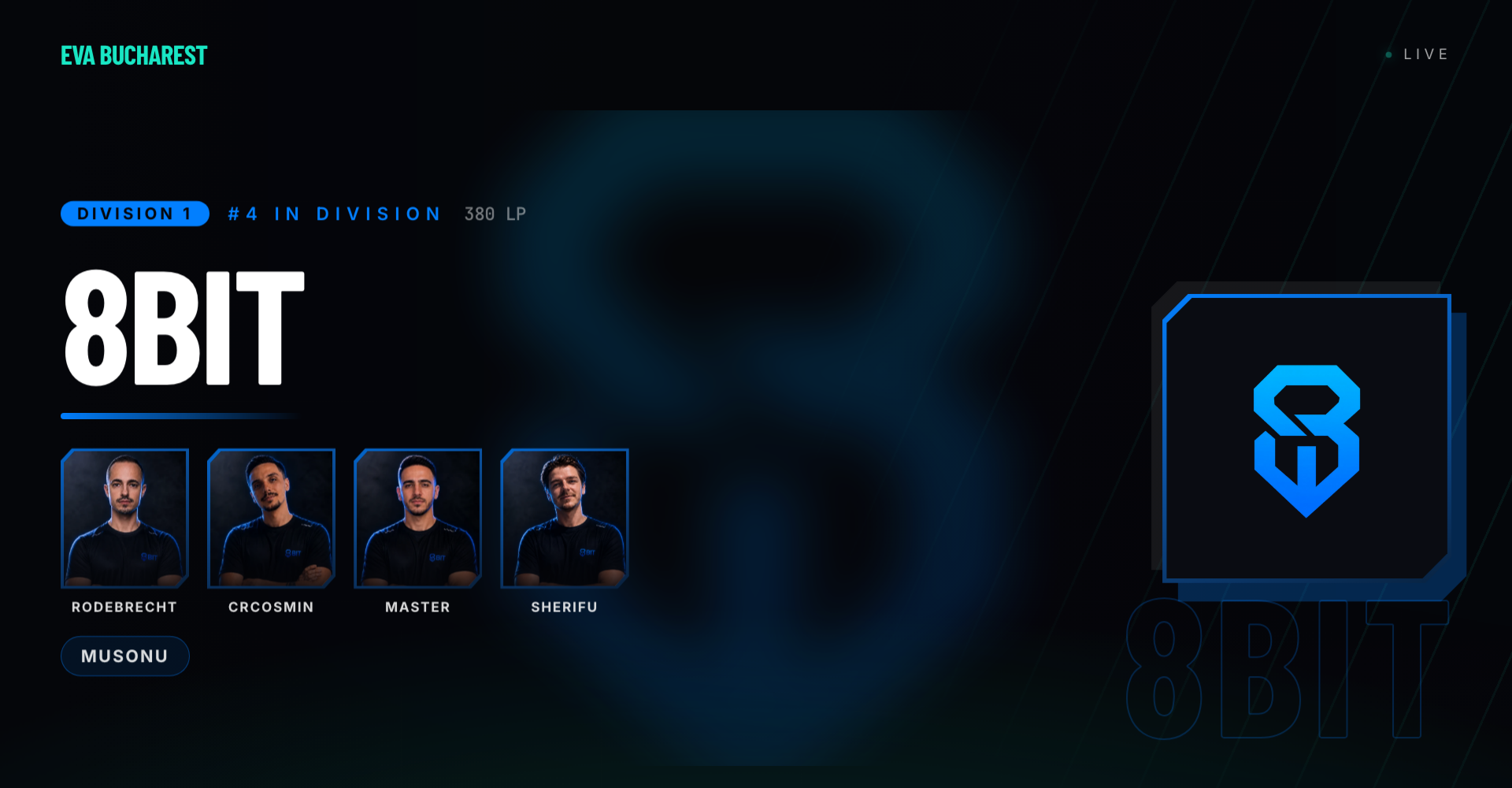
Every venue gets an arena screen: a rotation of slides for the TVs in the venue. A spotlight for each league team with player portraits, the ladder cover, and more. You pick the slides from a checklist in admin, and you see a live preview of exactly what will run before you save. No guessing, no walking to the TV to check.
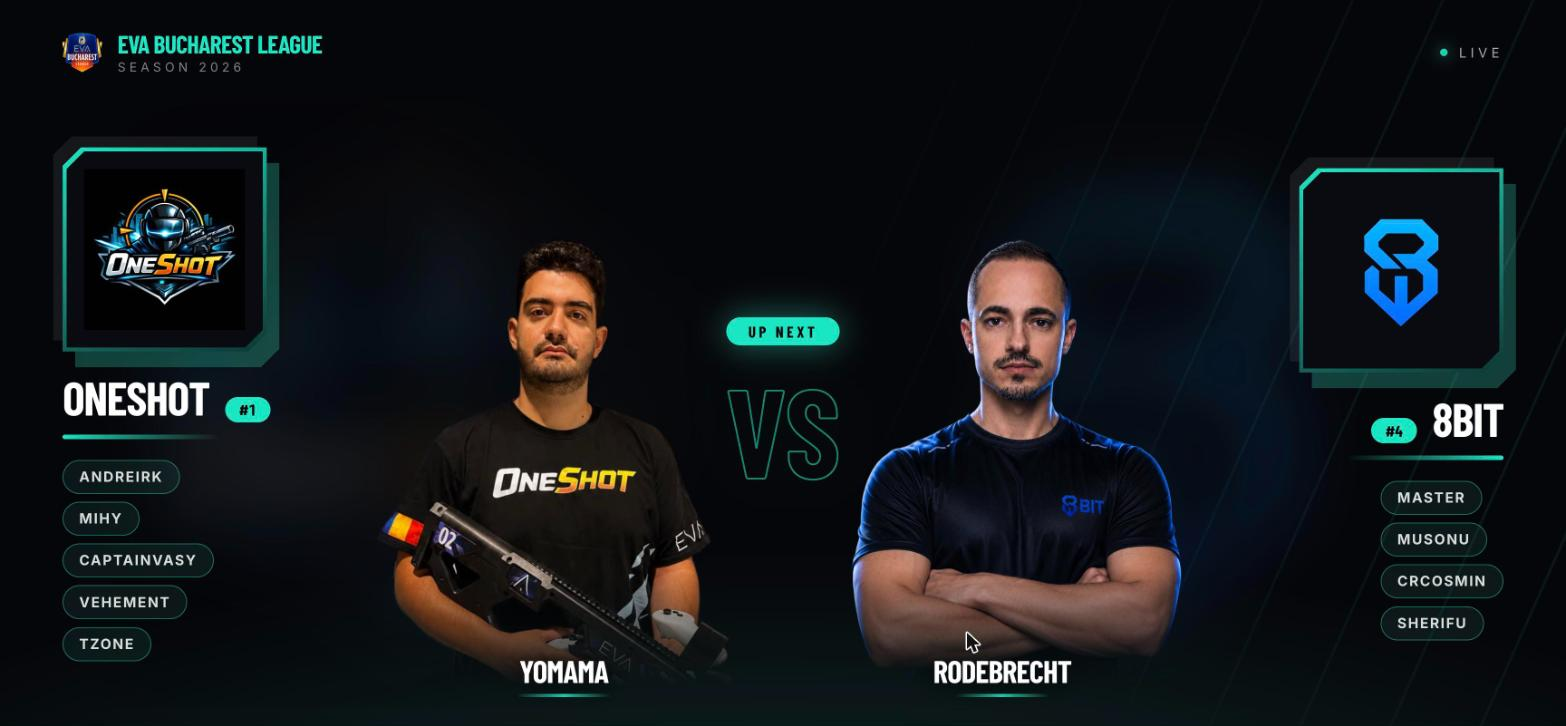
For broadcast nights there is a stream screen, an overlay that makes any venue look like a production: Up Next with big cut-out portraits of the team captains, live league positions next to the team names, live scores and stats as maps finish, and recaps of the previous stage between series. One person with OBS is a broadcast crew.
Act III: The engine underneath
The ladder: no such thing as a dead night
Team leagues have a hard problem: some nights, the teams just don't show. On Inter-Arena those nights are not lost. They are ladder nights. Every walk-in solo game is rated on a persistent skill ladder, so a random Tuesday with six strangers is still a fight for rank. Players come back because their number is on the line.
The rating is built for arena reality, not copied from chess. A plain Elo cannot rank individuals in a team game, since every teammate would get the same delta, so ours prices two things at once: did your side win, and how much of it was you. It also knows the tricks: farming the same weak lobby for easy points is detected and damped automatically, while normal long sessions against the same rivals stay fully rewarded.
And one promise we consider non-negotiable: points, once earned, are never rewritten. Every rating event is kept in a full ledger; if a score is corrected, the ladder replays honestly, but a rule change only ever applies from its ship date forward. Your history is yours. For any venue or any network that wants a ladder players actually trust, this is the foundation.
Scouting-grade analytics
Because every map of every game is stored, the platform knows things teams can use: win rates per map per team, head-to-head records, individual form per map. Before a recent Division 1 night, one team walked into the pick/ban knowing the opposing captain won just 11% of their games on the map they were about to pick, and banned accordingly. That is the kind of preparation tier-one esports pays analysts for, sitting one click away from a local league team.
Private matches: for teams with secrets
Some games should not feed a public ladder. Pro teams scrim. Rivals settle things quietly. Inter-Arena supports fully private matches, scheduled in advance through matchmaking with a shared team calendar, or created on the spot at the venue. Consent is real: the match starts only after both teams enter a PIN, delivered automatically to every member through their Inter-Arena notifications. The results are visible to the two teams and no one else. They never touch public stats or the ladder.
For a professional structure, an EVA Pro League for example, this is the missing piece: real training infrastructure where strategies stay secret until match day.
Identity that players carry with them
Every player has a profile with their whole career aggregated across every tournament: ladder runs, league seasons. Private match history stays private. Teams get their own pages with their own colors branding the entire site. And every link, whether a team page, a match or a league, unfurls on social media as a designed card, so the community's sharing is the venue's marketing.
What this means at scale
Everything above is configured per venue: its own Discord, its own screens, its own leagues, its own timezone. Bucharest happens to be one venue. The platform does not care how many there are.
An EVA arena is a phenomenal machine for producing competition. Inter-Arena is the machine that turns that competition into a community. Automatically, every night, starting five minutes from now.
Inter-Arena runs the EVA Bucharest League. Article images are real, generated by the platform during Division 1 league nights.